Search This Blog

Showing posts with label Acute Pain. Show all posts

Acute Pain related to Abdominal Distension


Abdominal distension is the process of increasing abdominal pressure resulting in increased pressure in the stomach and the abdominal wall. Distention can occur mild or severe depending on the pressure generated. Abdominal distention can occur locally or complete and can be gradual or sudden. Acute abdominal distension may be a sign of peritonitis or signs of acute obstruction of the stomach.
Abdominal distension may result from fat, flatus, fetus (pregnant or intra-abdominal mass, ectopic pregnancy) or a liquid. Liquids and gases are normal in the GIT, but not in the peritoneal space. If liquid or gas can not exit freely, abdominal distension can occur. In the peritoneal space, distention can cause acute hemorrhage, accumulation of ascites fluid or air from the perforations of the organs in the abdomen.

Acute abdomen terminology has been widely known but difficult to define precisely. But as a reference, acute abdomen is a nontraumatic sudden onset disorder with primary symptoms of abdominal area and require immediate surgery.

The term acute abdomen or abdominal distress described the clinic as a result of gravity in the abdomen that usually occurs suddenly with pain as the main complaint. This situation requires immediate countermeasures are often in the form of surgery, for example on the obstruction, perforation, or bleeding.

Many conditions can cause acute abdomen. Broadly speaking, the situation can be grouped into five areas:
  • Bacterial inflammation processes - chemical;
  • Mechanical obstruction: such as volvulus, hernia, or adhesions;
  • Neoplasms / tumors: carcinomas, polipus, or ectopic pregnancy;
  • Vascular disorders: embolism, thromboembolism, perforation, and fibrosis;
  • Congenital abnormalities.
The most common causes of acute abdomen are:
  • Gastrointestinal tract abnormalities: non-specific pain, appendicitis, infection of the small intestine and colon, strangulated hernias, peptic ulcer perforation, perforation of the bowel, Meckel diverticulitis,
  • Boerhaeve syndrome, inflammatory bowel disorder, Mallory Weiss syndrome, gastroenteritis, acute gastritis, mesenteric adenitis.
  • Pancreatic abnormalities: acute pancreatitis.
  • Urinary tract abnormalities: renal or ureteral colic, acute pyelonephritis, cystitis, acute renal infarction.
  • Liver, spleen, and biliary tract abnormalities: acute cholecystitis, acute cholangitis, liver abscess, ruptured liver tumor, spontaneous rupture of the spleen, splenic infarction, biliary colic, acute hepatitis.
  • Gynecological abnormalities: ruptured ectopic pregnancy, twisted ovarian tumors, ovarian follicular cysts rupture, acute salpingitis, dysmenorrhea, endometriosis.
  • Vascular abnormalities: aortic aneurysm rupture and visceral, acute ischemic colitis, mesenteric thrombosis.
  • Peritoneal abnormalities: intra-abdominal abscesses, peritonitis primary, tuberculosis peritonitis.
  • Retroperitoneal abnormalities: retroperitoneal bleeding.

Acute pain related to distention, rigidity.

Goal: pain is resolved or controlled.

Expected outcomes: patients revealed a decrease in discomfort; expressed pain at a tolerable level, indicating relaxation.

Intervention:
  • Maintain bed rest in a comfortable position; do not support the knee.
  • Assess location, weight and type of pain.
  • Assess effectiveness and monitor for side effects anlgesik.
  • Give a planned rest period.
  • Assess and advise doing for the practice of active or passive range of motion every 4 hours.
  • Change positions frequently and give a back rub and skin care.
  • Auscultation bowel sounds; note the increase in rigidity or pain; give enema slowly when been booked.
  • Provide and encourage alternative measures of pain relief.

Acute Pain related to Lung Cancer

Nursing Care Plan for Lung Cancer

Acute pain related to cancer cell invasion

Goal: after the nursing intervention, the expected decrease pain scale clients.

Expected outcomes:
  • Reported pain gone / controlled.
  • Looked relaxed and sleep / rest.
  • Participate in activities desired / required.

Intervention and rational:

1). Ask the patient about pain. Determine the characteristics of pain. Create ranges intensity on a scale of 0-10.
Rational: Assist in the evaluation of the painful symptoms of cancer. The use of scale ranges help patients assess the level of pain and provide a tool for the evaluation of the effectiveness of analgesic, improving pain control.

2) Assess statement of verbal and non-verbal patient's pain.
Rationale: The discrepancy between verbal / non-verbal can provide clues degree of pain, the need / keefeketifan intervention.

3) Write down the possible causes of pain patofisologi and psychology.
Rational: posterolateral incision is uncomfortable for the patient from the anterolateral incision. Besides the fear, distress, anxiety and loss of appropriate diagnosis of cancer can interfere with the ability to cope.

4) Instruct to express feelings of pain.
Rational: Fear / problems can increase muscle tension and lower the threshold of pain perception.

5) Provide comfort measures. Encourage and teach the use of relaxation techniques.
Rationale: Increase relaxation and distraction.

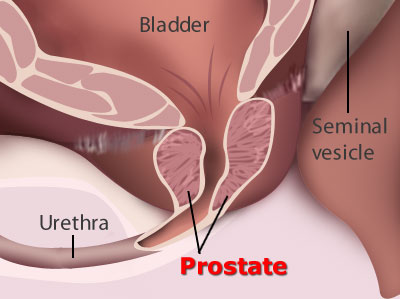
Nursing Interventions for Acute Pain - BPH Benign Prostatic Hyperplasia

BPH Nursing Diagnosis Acute PainNursing Diagnosis: Acute Pain - BPH Benign Prostatic Hyperplasia

Acute Pain Definition: Sensory and unpleasant emotional experience arising from actual or potential tissue damage, appear suddenly or slowly with mild to severe intensity with which the end can be anticipated or expected and lasted less than 6 months.

Related factors: Agents injury (biological, chemical, physical, psychological)

Acute pain - Limitation of Characteristics:
  • Reports of verbal or non verbal pain
  • The fact of the observation
  • The position to avoid pain
  • The movement to protect
  • Cautious behavior
  • Face masks
  • Sleep disturbance (glazed eyes, looking tired, it is difficult or chaotic motion, grinning)
  • Focused on self-
  • The focus narrows (decreasing the perception of time, damage to the thought process, decreased interaction with people and the environment)
  • Distraction behavior, eg roads, meet other people and / or activities, repetitive activities)
  • Autonomic responses (such as diaphoresis, changes in blood pressure, changes in breathing, pulse and dilated pupils)
  • Changes in muscle tone, autonomic (probably in the range from weak to stiff)
  • Expressive behavior (eg, restlessness, moaning, crying, alert, iritabel, breath / sigh)
  • Changes in appetite and drinking.

Goal :

1. Control Pain
Definition: a person's actions to control pain
Indicators:
  • Know the factors that cause
  • Know the onset / timing of pain
  • Non-analgesic relief measures
  • Using the analgesic
  • Reported the symptoms to the health care team (doctors, nurses)
  • Pain can be controlled
Description:
1 = not done
2 = rarely done
3 = sometimes done
4 = often done
5 = always done

2. Shows the level of pain
Definition: the severity of pain reported or indicated
Indicators:
  • Reported pain
  • Frequency of pain
  • The duration of pain episodes
  • The expression of pain: facial
  • The position of protecting the body
  • Anxiety
  • Changes in respiration rate
  • Changes in Heart Rate
  • Changes in blood pressure
  • Changes in pupil size
  • Perspiration
  • Loss of appetite
Description:
1: weight
2: a little heavy
3: medium
4: a little
5: no


Nursing Interventions for Acute Pain - BPH Benign Prostatic Hyperplasia

1. Pain Management
Definitions: change or reduction of pain to an acceptable level of patient comfort.

Intervention:
  • Assess thoroughly about pain, including: location, characteristics, time of occurrence, duration, frequency, quality, intensity / severity of pain, and trigger factors.
  • Observation of non-verbal cues of discomfort, especially in the inability to communicate effectively.
  • Give analgesics in accordance with the recommendation.
  • Use a personal communication that the client can express therapeutic pain.
  • Assess the client's cultural background.
  • Determine the impact of the expression of pain on quality of life: sleep patterns, appetite, activities, mood, relationships, work, responsibility roles.
  • Assess the individual's experience of pain, a family with chronic pain.
  • Evaluation of the effectiveness of the actions that have been used to control pain.
  • Provide support to clients and families.
  • Provide information about pain, such as: the causes, how long the case, and precautions.
  • Control of environmental factors that may affect the client's response to discomfort (eg, room temperature, irradiation, etc.).
  • Encourage clients to monitor their own pain.
  • Teach the use of non-pharmacological techniques. (Ex: relaxation, guided imagery, music therapy, distraction, application of heat and cold, massase).
  • Evaluate the effectiveness of measures to control the pain.
  • Modification of pain control measures based on client responses.
  • Increase the sleep / rest.
  • Encourage clients to discuss precisely the experience of pain.
  • Tell your doctor if action is not successful or event of a complaint.
  • Inform other healthcare team / family members when action nonfarmakologi done, to a preventive approach.
  • Monitor the comfort of the client to pain management.
2. Provision of Analgesic
Definition: the use of pharmacological agents to reduce or eliminate pain.

Intervention:
  • Determine the location of pain, characteristics, quality, and severity before treatment.
  • Give the drug to the principle of "5 right".
  • Check the history of drug allergy.
  • Involve the client in the electoral analgesics to be used.
  • Select the appropriate analgesic / analgesic combination of more than one if it has been prescribed.
  • Monitor vital signs before and after administration of analgesics.
  • Monitor adverse drug reactions and medication.
  • Document the response of the effects of analgesic and unwanted.
  • Perform actions to reduce analgesic effects (constipation / stomach irritation).
3. Environmental management: comfort
Definition: manipulate the environment for therapeutic benefit.

Intervention:
  • Choose a room with the right environment.
  • Limit visitors.
  • Determine the things that cause discomfort such as damp clothing.
  • Provide a comfortable bed and clean.
  • Determine the most comfortable room temperature.
  • Provide a quiet environment.
  • Pay attention to hygiene to maintain patient comfort.
  • Adjust the position of the patient made ​​comfortable.

Source : http://nursesnanda.blogspot.com/2012/07/nursing-interventions-for-acute-pain.html

Disturbed Sleeping Patterns related to Pain

Nursing Diagnosis and Interventions : Disturbed Sleeping Patterns related to Pain

Definition: Time-limited disruption of sleep (natural, periodic suspension of consciousness) amount and quality

Sleep is required to provide energy for physical and mental activities. The sleep-wake cycle is complex, consisting of different stages of consciousness: rapid eye movement (REM) sleep, nonrapid eye movement (NREM) sleep, and wakefulness. As persons age the amount of time spent in REM sleep diminishes. The amount of sleep that individuals require varies with age and personal characteristics.

Expected outcomes : Clients can meet the needs rest or sleep.

Nursing Interventions - Disturbed Sleeping Patterns related to Pain :

Independent:
  • Determine the normal and usual sleeping habits and changes.
  • Provide a comfortable bed
  • Create a new bedtime routine that included in the pattern of the old and new environments
  • Instruct the relaxation measures
  • Increase the comfort of sleep regimen, such as a warm bath and massage.
  • Use a bed rail as indicated: lowered bed if possible.
  • Avoid disturbing when possible, for example, awaken to a drug or therapy.
Collaboration
  • Give sedatives, hypnotics as indicated
Rational:
  • Assessing the need and identify appropriate interventions.
  • Improve sleeping comfort and support of the physiological / psychological
  • When the new routines contain as many aspects of old habits, stress and anxiety related to reduced
  • Help induce sleep
  • Enhance the relaxation effect
  • Can feel the fear of falling due to changes in the size and height of the bed, place a fence to help change the position
  • More uninterrupted sleep creates a feeling fresh and probably the patient may not be able to go back to sleep if awakened.
  • May be given to help the patient sleep or rest.

Acute Pain

Acute Pain NANDA Definition: Unpleasant sensory and emotional experience arising from actual or potential tissue damage or described in terms of such damage (International Association for the Study of Pain); sudden or slow onset of any intensity from mild to severe with an anticipated or predictable end and a duration of less than 6 months

Pain is a highly subjective state in which a variety of unpleasant sensations and a wide range of distressing factors may be experienced by the sufferer. Pain may be a symptom of injury or illness. Pain may also arise from emotional, psychological, cultural, or spiritual distress. Pain can be very difficult to explain, because it is unique to the individual; pain should be accepted as described by the sufferer. Pain assessment can be challenging, especially in elderly patients, where cognitive impairment and sensory-perceptual deficits are more common.

Acute Pain Defining Characteristics
  • Patient reports pain
  • Guarding behavior, protecting body part
  • Self-focused
  • Narrowed focus (e.g., altered time perception, withdrawal from social or physical contact)
  • Relief or distraction behavior (e.g., moaning, crying, pacing, seeking out other people or activities, restlessness)
  • Facial mask of pain
  • Alteration in muscle tone: listlessness or flaccidness; rigidity or tension
  • Autonomic responses (e.g., diaphoresis; change in blood pressure [BP], pulse rate; pupillary dilation; change in respiratory rate; pallor; nausea)
Acute Pain Related Factors:
  • Postoperative pain
  • Cardiovascular pain
  • Musculoskeletal pain
  • Obstetrical pain
  • Pain resulting from medical problems
  • Pain resulting from diagnostic procedures or medical treatments
  • Pain resulting from trauma
  • Pain resulting from emotional, psychological, spiritual, or cultural distress
NOC Outcomes (Nursing Outcomes Classification)
Suggested NOC Labels
  • Comfort Level
  • Medication Response
  • Pain Control
NIC Interventions (Nursing Interventions Classification)
Suggested NIC Labels
  • Analgesic Administration
  • Conscious Sedation
  • Pain Management
  • Patient-Controlled Analgesia Assistance
  • Expected Outcomes
  • Patient verbalizes adequate relief of pain or ability to cope with incompletely relieved pain.